

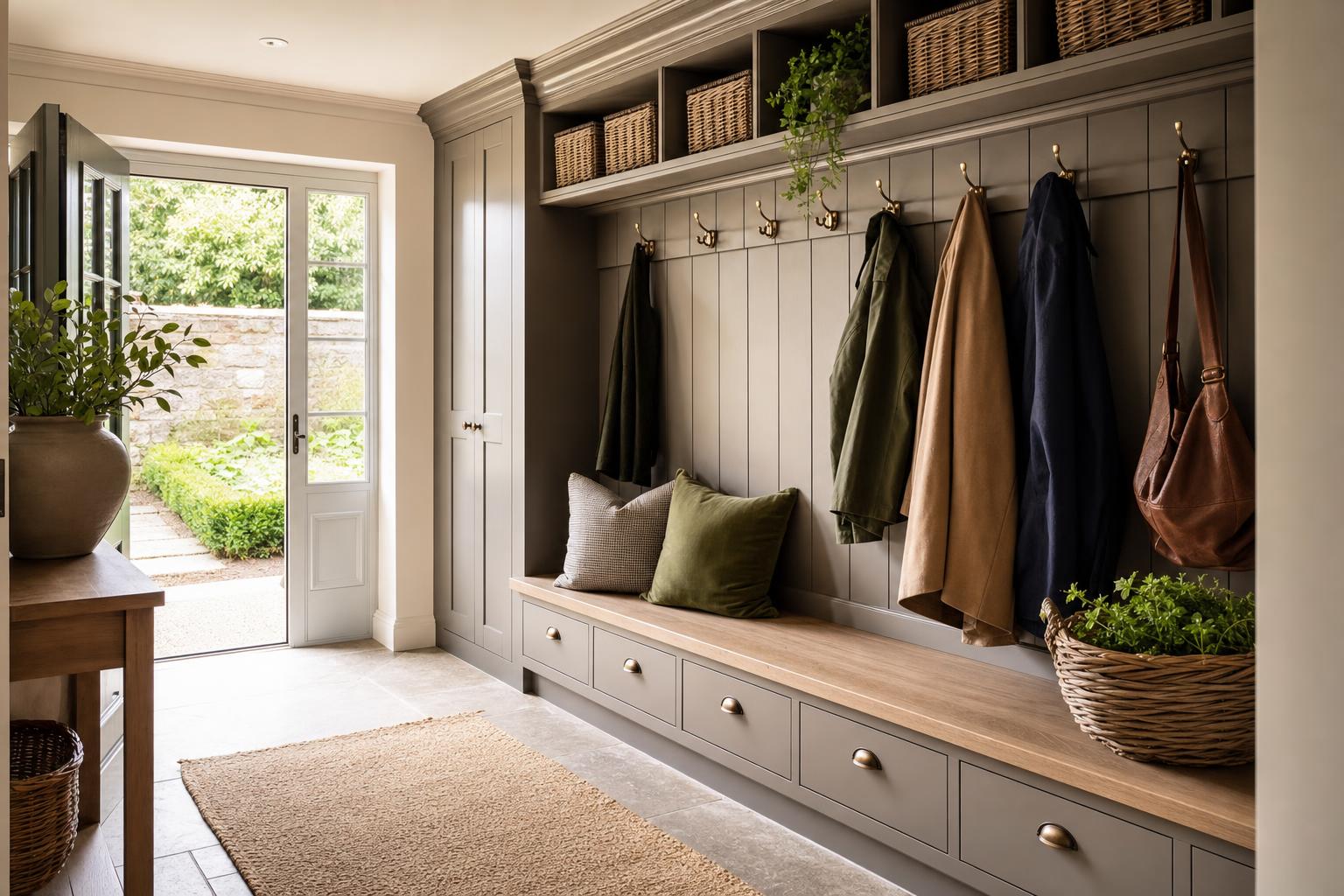
Practical mudroom design ideas to help keep your home organized through snow, slush, and busy winter days.
Michigan winters bring their share of challenges for homeowners. Wet boots pile up by the door, heavy coats compete for closet space, and snow-covered gear can quickly turn an entryway into a cluttered mess.
A well-designed mudroom can make these everyday routines easier. With the right combination of storage, durable materials, and a layout that suits your household, this hardworking space can help keep the rest of your home cleaner and more organized.
Whether you have a dedicated mudroom, a small entryway, or an unused corner near your garage entrance, thoughtful design can help you make better use of the space.
The most effective mudrooms are designed around what your family actually brings home.
During a Michigan winter, that often means bulky coats, snow pants, gloves, hats, umbrellas, and multiple pairs of boots. Without designated storage, these items can quickly spread into hallways, kitchens, and living areas.
Consider incorporating a combination of:
The goal is to give everything a place near the door where it naturally belongs. When storage is intuitive and accessible, it becomes easier for everyone in the household to maintain an organized entryway.
Mudroom flooring needs to do more than complement the rest of your home's interior. It should stand up to moisture, dirt, grit, and frequent cleaning.
When choosing flooring for a mudroom, consider the material's water resistance, slip resistance, durability, and maintenance requirements.
Porcelain tile is a popular option because it is durable and available in many colors, patterns, and finishes. Other flooring materials may also be suitable, depending on the product specifications and how the space is used.
Beyond the flooring itself, pay attention to the details that help protect the surrounding area.
A properly sized boot tray can collect melting snow and water. Easy-to-clean surfaces near the entrance can help simplify daily maintenance, while an appropriate transition between the mudroom and adjacent flooring creates a more cohesive finish.
If you're remodeling an existing entryway, consider whether the current flooring and subfloor are suitable for the moisture and traffic the space regularly experiences.
Wet footwear is one of the biggest sources of winter mess. When boots are left in a pile beside the door, water can spread across the floor, and footwear may take longer to dry.
A dedicated boot area helps contain the mess and keeps the entryway more manageable.
Depending on your available space, consider a washable boot tray, an open shoe rack, or a designated lower cubby for wet footwear. Choose storage that allows enough room for the types of boots your household wears.
Ventilation also matters. Wet gear should be able to dry properly, and damp items should not be stored in tightly enclosed spaces before they are dry.
For households with children or outdoor enthusiasts, separate spaces for snow pants, hats, gloves, and other winter accessories can make it easier to get ready before heading outside.
These small design decisions can make a noticeable difference during the coldest months of the year.
Not every home has space for a large, dedicated mudroom. Fortunately, a functional entryway doesn't have to be oversized.
The key is to use the available space efficiently.
In a smaller area, wall-mounted hooks can free up floor space, while vertical cabinetry can provide storage without taking up as much room. A narrow bench may offer a convenient place to sit while putting on boots, and baskets underneath can hold accessories.
If the entryway is shared with a laundry room, garage entrance, or hallway, think about how people move through the space. Storage should not obstruct doors, narrow important walkways, or make it difficult to carry groceries and other items into the house.
Built-in storage can be especially useful when standard furniture does not fit the dimensions of the room. Custom cabinetry, carefully planned shelving, and a well-positioned bench can help turn an awkward corner into a practical everyday landing zone.
A place to sit may seem like a small addition, but it can make a mudroom much easier to use.
A bench provides somewhere to sit while removing boots, adjusting winter footwear, or helping children get ready to go outside.
If space allows, a built-in bench can also create opportunities for additional storage. Drawers or cabinets underneath can hold shoes and accessories, while hooks and shelves above can keep frequently used items within reach.
When planning a bench, consider its height, depth, surrounding clearance, and the number of people who will use it. Materials should be appropriate for a high-traffic area where wet clothing and footwear are common.
For a coordinated design, the bench can be incorporated into the same cabinetry and finish palette as the rest of the mudroom.
Mudrooms are often located near garage entrances or side doors, where natural light may be limited.
Good lighting helps make the area safer and more convenient, especially during early winter mornings and evenings when daylight is limited.
Overhead lighting can illuminate the entire space, while additional lighting near a mirror, bench, or storage area can improve visibility where it is needed most.
Surface selection is equally important. Mudrooms see frequent contact with dirty footwear, damp outerwear, bags, and outdoor equipment.
Choose finishes that are practical to maintain. Cabinet materials, paint finishes, hardware, and countertops should be selected with the room's daily use in mind.
A light, welcoming color palette can make a compact entryway feel more open, while darker accents or patterned flooring may help create visual interest. The best choices will depend on the home's overall design and the level of maintenance the household prefers.
A mudroom should reflect the way your household moves through the home.
A family with young children may need low hooks, accessible cubbies, and easy-to-reach storage for backpacks. A household with pets may benefit from a dedicated place for leashes, towels, and outdoor accessories. Homeowners who spend time hiking, gardening, or enjoying winter sports may need more space for specialized gear.
Think about the routes people take when entering the house. Where do they put their keys? Where do groceries come in? Is the garage entrance the primary way everyone enters the home?
Answering these questions can help you identify the features that will make the greatest difference.
The most successful mudrooms are not necessarily the largest or most elaborate. They are the ones designed around real routines and the needs of the people who use them.
Sometimes, adding a few hooks, a bench, and better storage is enough to improve an entryway. In other cases, the existing layout may not provide enough room for the storage your household needs.
If coats and footwear consistently spill into adjacent rooms, the entryway feels cramped, or the available storage does not match your daily routines, a more comprehensive redesign may be worth considering.
A remodeling project might involve built-in cabinetry, updated flooring, improved lighting, or a reconfiguration of the existing space. Depending on the home's layout and structural constraints, it may also be possible to reconsider how an adjacent laundry room, hallway, or garage entrance is used.
Stella Design & Remodel helps homeowners think through how their spaces can better support everyday living. A design-build approach can bring the layout, storage, materials, and construction planning together so the finished mudroom feels like a natural part of the home.
For homeowners in Plymouth and surrounding Metro Detroit communities, planning ahead can also provide time to discuss design preferences and project scheduling before the next winter season.
Porcelain tile is a common choice because it is durable and available in a wide range of designs. However, the best flooring depends on the specific product's water resistance, slip resistance, maintenance requirements, and compatibility with the existing subfloor.
Assign specific storage areas for coats, boots, gloves, hats, and bags. Use boot trays to contain melting snow, keep everyday items accessible, and periodically remove gear that is no longer needed. A layout that matches your household's routines makes organization easier to maintain.
Yes. Hooks, vertical storage, a compact bench, baskets, and well-planned shelving can help create a functional mudroom in a small area. Built-in solutions may be useful when standard furniture does not fit comfortably.
Most family mudrooms benefit from coat hooks, shoe or boot storage, accessible cubbies, a bench, and designated places for bags and winter accessories. The exact features depend on the household's size, routines, available space, and storage needs.
A mudroom can improve organization, provide a convenient transition between outdoors and indoors, and help contain dirt and moisture. Whether a remodel is worthwhile depends on your current entryway, your household's needs, and the scope and cost of the proposed improvements.
A well-designed mudroom can make everyday life easier, particularly during Michigan's snowy and unpredictable winter months. Thoughtful storage, durable flooring, practical lighting, and a layout that supports your routines can help keep the entryway organized and the rest of your home more comfortable.
Whether you're updating a compact entrance or considering a larger remodeling project, start by identifying what causes the most frustration in your current space.
Ready to make better use of your entryway? Stella Design & Remodel works with homeowners in Plymouth and surrounding Metro Detroit communities to create practical, thoughtfully designed spaces that fit the way they live.
Contact Stella Design & Remodel to discuss your home's remodeling possibilities.